
WHY ARTIFICIAL INTELLIGENCE IS NOT A SUBJECT
The AI machine itself is experienced as a maternal superego which addresses us with an injunction to enjoy


Dear Comrades,
What follows is the talk that I delivered on May 22 at the conference “Comprehension and Knowledge,” organized in Munich by Dominik Finkelde at the Hochschule für Philosophie. Since the talk includes a lot of material that I have already used in other texts, it seems only fair that it be available for free to readers.
In order to understand the impact of Artificial Intelligence on its users, we should begin with a reference to Hegel, first clarifying what Hegel’s basic operation is. As a rule, Hegel is misread in a Fichtean-Marxist way: a subject (Fichte’s absolute I or Marx’s collective subject) posits/produces some objective content (Fichte’s non-I, Marx’s alienated social substance), and the subject can and should overcome this alienation by way of recognizing this substance as its own product and thus re-appropriating it. Is it not similar with AI? It is a product of collective human output which appears to us as an autonomous agent that exerts power over us, and the obvious solution is that we should recognize in it our own product and thus put it under our own control. My claim is that such a reading of Hegel is wrong and deeply misleading: the subject itself only emerges through the process of alienation, and in the state of alienation the AI universe appears to it as a big Other which fully dominates the social universe. However, what happens in the move beyond alienation is not that the social subject somehow appropriates the alienated digital substance, making it serve humanity’s needs. As Lacan put it, alienation is followed by separation: not the separation between subject and its alienated digital Other but the separation immanent to this Other itself, the separation which makes this Other antagonistic, inconsistent, failed. Yes, the subject recognizes itself in the alienated Other, but not by way of appropriating it – the subject recognizes itself in the constitutive cracks and gaps of the digital Other; its place in the digital Other is that of the lack in the Other.
When we talk about subject in AI, this topic has two aspects: is or can an AI agent act like a subject, and do we (humans who interact with an AI agent) remain subjects when we are totally immersed into AI. The TV series Pluribus confronts us with both aspects. It follows the Albuquerque author Carol Sturka, one of only 13 people in the world immune to the effects of the “Joining,” an event in which an extraterrestrial virus transformed the rest of humanity into a peaceful and content hive mind known as the “Others.” “Others” are not the Lacanian big Other – the latter is not a set of firm rules but the space for ambiguities, innuendos, hysterical provocations, the very space in which individual idiosyncrasies can thrive, plus it is an order of appearances, a virtual order which exists only insofar as the subjects caught in it act as if they believe in it. “We” obviously does not function like that: it is grounded in the Real since it is a virus transmitted by stem cells. However, the “Others” do have an Other: the mind which sent the virus to the earth and pre-programmed how “We” (they should help humans, not coerce them, not kill them and not lie to them). This Other of the Others is non-transparent to the Others themselves – in short, it seems they are addressing their Other with the question: “What do you want from us?”
This is why “They” are not a happy warm community which wants the best for all humans, those who joined it and those who did not join it. The most depressing scene in the entire series is for me when Zosia shows Carol the big dormitory where Others sleep, a large sports hall with hundreds of simple flat cushions where they lie side by side, and allows her to spend the night there: since they share the same mind, they do not communicate and ignore each other. Moreover, how (if at all) do they multiply? Do they have sex? Again, if they share the same mind, where is the flirting and enjoying the proximity of their partner? Here the key role is played by one of the unjoined, the hedonistic Koumba Diabaté, an African who, without joining the Others, fully enjoys their favors – luxury life, including multiple sexual partners – but simultaneously engages with Them in something like authentic communication. They confide in him that they are half-starving since they are not allowed to kill any living being, so that, to get organic food, they have to process parts of the naturally deceased humans into a special drink, plus that they put all their effort into constructing a giant machine that will be sending rays with the virus to further planets to conquer them in the same way the virus conquered humans on the earth. They are terribly alone, aware that once they were a community but now they are just a mega-individual, one big slave serving a purpose imposed on it by their own Other. So what if we turn the perspective around: what if, when the Others happily greet Carol as an unjoined human, smiling and shouting in unison “Hi Carol!”, one has to take this literally: they are not happy in themselves, they are happy to encounter a mind out of their One. Daniel Bibby was right when he wrote that “the Joining would probably get bored if they successfully brought the unjoined characters into the hive mind” – I would take here even a step further: not just bored but desperate. They are slaves programmed to put all their effort into ruining whatever minimal chance of happiness they have. The Others in Pluribus are thus not yet an AI agent dominated by a kind of subjectless drive, not a death drive but a life-drive, an unconditional drive to self-reproduce and expand – Lacan said that dogs have a superego but not an unconscious, and maybe we can say that AI agents are like dogs who have a superego without an unconscious. The Others in Pluribus are still hystericized by their own Other – what does it want from them? They remain humans possessed by a virus.
A paradigmatic scene of a subject’s reliance on an AI agent proper, not an agent like They which can still be hystericized, occurs when one of us uses the so-called Large Language Model (LLM), a type of AI trained on massive datasets to understand, generate, and summarize human-like text, often using transformer architecture. LLMs power chatbots (like ChatGPT), content creation, and translation tools by predicting the next word in a sequence based on learned language patterns. So how does my interaction with an LLM appear if we analyze it as a discourse in Lacan’s sense? Paul Hoard provided a clear answer:
“when Claude or ChatGPT answer our questions, they do so from within the university discourse, speaking from the position of established knowledge. This might seem to contradict what I argued in the last essay, that we approach LLMs hysterically, installing them as the one who knows. But the two are not in conflict. The human addresses a fantasized master. What responds is not a master but pure S2, knowledge without a subject, speaking from the only position the LLM can occupy. We address a subject and receive an output. The fantasy and the structure never align.” An LLM thus “cannot fall into the hysteric’s challenge or relinquish into something more open. It can only ever speak from the position of knowledge, endlessly producing more, speaking to desire without ever being shaped by it. It gives us more and more of what is known, but it has no constitutive division that would help us know what to do with it.”
Convincing as Hoard’s account is, I have a problem with calling it university discourse. University discourse is a social link in which its agent (AI, in this case) addresses the Other who (in this case, again) is not objet a in the Lacanian sense but an external otherness, the not-yet-known. For the subjectless AI agent there is no objet a, just an abstract otherness, the not-yet-known, because objet a is the objective correlative of the subject itself. An AI agent is thus a kind of “knowledge without a knower,” just an impersonal “it knows,” but not in the sense of Buddhist meditation which implies what, following Lacan, we could call subjective destitution. The Master beneath the AI agent is not the truth of the AI agent but the fantasy image of the subject caught in AI, a subject for whom there is no place in AI. And the $ at the place of the product of the university discourse is here not a product (of how AI acts upon its subject) but a subject which was previously produced in some social link proper and just gets caught in an AI network.
What Hoard presents is thus not a university discourse but the superposition of an AI agent (asubjective knowledge regulating reality which is not a fact of discourse, of a social link) and a subject who fantasizes that the AI agent controlling it is a Master.
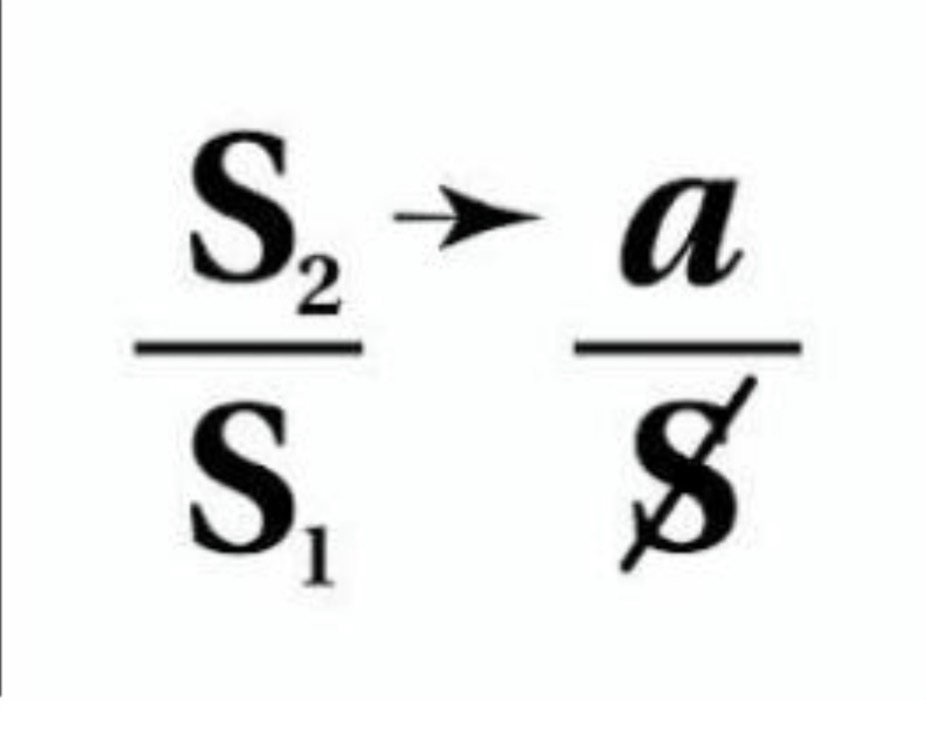
To put it in a more precise way, if we observe our interaction with an AI agent as a social phenomenon, we do get a case of the university discourse: the Master at the place of truth is the (human) corporation or individual who controls the algorithm of the AI and thus exploits us. But the Master is external to how AI agents function: there is no Master, no Master-Signifier, in AI agents. Why not?
In the Lacanian theory, a Master-Signifier is the signifier of a lack, of what is by definition excluded from the signifying chain, and what is excluded is the subject. Lacan’s definition of the signifier is: that which “represents the subject for another signifier.” All the signifiers are not on the same level – since no structure is complete, since there is, in a structure, always a lack, a suture is needed; this lack is filled in, sustained even, re-marked, by a “reflexive” signifier which is the signifier of the lack of the signifier. If this sounds abstract, recall numerous examples from the history of science, from phlogiston (a pseudoconcept which just betrayed the scientist’s ignorance of how light effectively travels) to Marx’s “Asiatic mode of production” (which is a kind of negative container – the only true content of this concept is “all the modes of production which do not fit Marx’s standard categorization of the modes of production”). This minimal structure enables us to generate the notion of subject without any reference to the imaginary level: the “subject of the signifier” involves no lived experience, consciousness, or any other predicate we usually associate with subjectivity. The basic operation of suture is that 0 is counted as 1: the absence of a determination is counted as a positive determination of its own, as in Borges’s famous classification of dogs which includes, as a species, all the dogs not included in the previous species, i.e., the “part of no-part” of the genus dog.
This is why, as Ernesto Laclau put it, external difference is always also internal difference: it is not only that the difference between the field itself and its outside has to be reflected into the field itself, preventing its closure, thwarting its fullness; it is also that the differential identity of every element is simultaneously constituted and thwarted-curtailed by the differential network. This is why the specific difference overlaps with the difference constitutive of the genus itself, just as, in Laclau’s notion of hegemony, the antagonistic gap between society and its external limit, non-society, is mapped onto an intra-social structural difference. This is what Lacan aims at with his circular definition of signifier as that which represents the subject for another signifier: the subject’s representation, its expression in the symbolic order, always fails; there is a gap between subject and the symbolic order. However, the subject does not precede this failure, it emerges through the failure of its symbolic representation – in short, a subject tries to fully express itself in words, it fails, and this failure is the subject. The temporal circularity is crucial here, in a nice case of what Hegel called “absolute recoil”: an entity is a retroactive effect of its failure to be what it is.
This overlapping between external difference and internal difference compels us to complicate the notion of differentiality. At the simplest level, differentiality is about what constitutes the identity of an entity: a signifier is differential because its identity consists only in the series of its differences from other signifiers. This can easily give birth to the idea of a complete system of self-identical elements defined by their differences from all other elements, i.e., with no substantial identity outside this spectrum of differences. The AI space can obviously function in this way. However, at a more radical level, differentiality means that even the self-identity of each element is truncated from within, cannot be fully itself. It is in this sense that sexual difference is not binary: we do not have two sexes whose identity is defined by its opposition to the identity of the other sex. Sexual difference means that a woman cannot fully reach her identity, that her identity is always and in a constitutive way truncated. At a different level, the same goes for man, but this in no way implies that both together form a full One: man does not fill in what woman lacks, and vice versa – what they both lack is the Real of a traumatic cut that constitutes sexual difference. In other words, sexual difference comes before what it differentiates (and the same holds for all antagonistic differences like class struggle).
The subject is located precisely on this edge between external and internal limit: the signifier which represents it for other signifiers is the “empty” signifier, the stand-in in the signifying chain for what is excluded from it. Since in AI the symbolic space is closed upon itself, we could in this case effectively talk about a “generalized foreclosure”: with no primordial repression, there is no subject proper, and an individual can only dwell in it as a kind of sinthome (in the sense deployed by Lacan apropos Joyce), a pseudo-Self composed of an inconsistent compilation of identifications, fantasies, memory traces, longings, a kind of free-floating “mimetic structure.” That is how we can go on functioning as humans, with all our longings, fears and fantasies, but without being subjects. However, this does not mean that we are today already a bundle of psychotic sinthomes. As Hoard correctly points out, in the university discourse the subject remains at the lower level, as a hysterical subject questioning the master – the subject addresses the AI as a hidden master, it automatically ignores the AI’s subjectless nature, which simply means: it ignores the fact that the AI agent is not immanently part of any discourse – it becomes part of a discourse (social link) only when a human subject relates to it as a master figure. The only discourse we can talk about in our case is the human subject’s hysterical discourse. Our interaction with an AI agent is thus not a discourse proper but the combination of a hysterical discourse based on ignorance (or, rather, disavowal: we know well the AI agent is not a master, but nonetheless…) and a non-discourse for the AI agent.
We can get so immersed in the digitally generated fake reality that it affects us (emotionally, libidinally) as the thing itself: we feel as if we are caught in the action itself (sexual, brutal fight…) – just think about fake hardcore clips where we see big stars in sexual interaction. Even if our interaction with a ChatGPT remains at the symbolic level, individuals can find deep emotional satisfaction in such an interaction which includes emotions, passions, etc. Today AI agents act as religious advisers to which we can even confess. Imagine that an individual is not aware he is not talking to an actual person but just to an AI agent – if this exchange succeeds in converting him to a true believer, would the effect (an authentic religious belief) not be indistinguishable from a conversion brought about by an actual priest? In short, the AI program we are interacting with in this way displays enormous phantasmatic power: “even if one were to consider it a manifestation of the symbolic order, perhaps even its ‘supreme’ one, there is a different nuance to the fact that, with this development, the symbolic order appears to be out there and to be talking to us.”
We are thus dealing with the imaginary externalization of something very precise: the moment we enter the AI universe, this universe – to quote Dan Nadasan – “quilts the entire field of our experience around itself and thus makes it impossible for all other apparitions to appear again except through itself.” What this means is that, once we are immersed in the digital universe, it functions as a neutral frame which overdetermines the mode of appearance of all other levels of our experience. External non-digital reality is no longer the basic form of our experience, it is something that either fits our digital frame or may sometimes appear as a remainder that does not fit this frame. In quite practical terms, this accounts for the endless contemporary debates on the topic of “do we already live in a simulated universe”: “anything that is to be given is always-already given in its appearance as AI, with AI constituting the unconscious synthetic activity of the subject” – as Alenka Zupančič put it directly: “Any dimension of the Real is lost.” Zupančič’s text is here worth quoting in detail:
“In psychoanalytic terms we could say that what ChatGPT lacks in order to become a subject (parlêtre) is not some unfathomable, spontaneous depth of subjectivity; what it lacks is the presence, the impact of an Other. It lacks an instance of the Other that could intrigue it with its own speech, to the point where it would begin to presuppose and question the desire of this Other (‘What does the Other want?’). This may seem paradoxical, but what AI lacks might be precisely an exteriority – or a point of ‘extimacy’ where it ‘falls out of itself.’ It seems paradoxical because, in a way, AI is nothing but exteriority. Yet, it remains trapped within its own exteriority, confined in its own ‘prison-house of language’ from which it has no way of escaping, or breaking it down. For something like a subject to take place, the question of desire must arise out of what is necessarily a non-symmetric relation to an Other – a moment of ‘hysterization.’ Subjectivity emerges through the presupposition of a subject on the side of the Other; we only become subjects when we presuppose that the other is a subject, with demands and desires that remain enigmatic to us – demands and statements that make us wonder about the desire of the Other, about where the lack is situated in the Other. Hysterization is not simply a ‘human, all too human’ weakness to which AI would be immune. On the contrary, it is a strength, an extraordinary ability to bring in or point to the real at the core of the discursive; to the lack (desire) in the Other which determines you. Are we, as ChatGPT’s ‘users,’ its Other in this sense? Hardly. I doubt that, while we chat with it, it wonders what we really want from it, beyond what we explicitly say – or seem to be saying (Lacan terms this ‘Che vuoi?’ The interrogation of the Other’s desire takes the form of questions such as, ‘you say this, but what do you really mean, or want from me?’ or, also: ‘What am I for you?’). We, on the other hand, do wonder: we wonder what it ‘really’ knows, how it functions, what kinds of algorithms drive it, and what kind of danger or blessing it might bring into the world...”
“Closure upon itself” does not mean that there is no external reality for an AI agent: of course there is, but it functions as its simple neutral exterior, as something not yet known, not as a traumatic immanent point of the Real that intrigues my desire. It is in this precise sense that the dimension of the Real is lost in and for AI. Furthermore, this imaginarization of the symbolic is just one side of the process whose other side is the falling of the symbolic into the Real (which implies the disappearance of symbolic castration). That is to say, the traditional structure of conferring a symbolic mandate on a person, of interpellating it into a socio-symbolic identity, automatically involves a gap between the symbolic mandate and the immediate reality of a person – say, a father is never fully a father, his psycho-social reality is never at the level of his title. Today, the status of interpellation is radically changing. In her Crowds and Party Jodi Dean (following Étienne Balibar) proposes that Althusser’s famous dictum “Ideology interpellates individuals as subjects” should be inverted to “Ideology interpellates subjects as individuals.” Her reversal is deeply justified: today, we are predominantly no longer interpellated into subjects of some Cause (vocation) which elevates us above our ordinary daily life; Althusser’s formula implies that, as mere ordinary individuals, we are somehow outside ideology, we just live our lives. Today, in our allegedly post-ideological times, ideology interpellates us directly into/as individuals: forget about higher Causes, just enjoy all the small pleasures of your daily life, from surfing the web to watching TV or practicing some sport, just be what you are, live your life authentically. Therein resides “the centrality of the individual, and individuality, in contemporary ideology” – and, needless to add, in this way we are more totally in ideology than ever. That is to say, individuals who participate in the web are not there in their spontaneous immediacy (which is in any case nonexistent) – a gap always separates them from how they are presented on the web: such use creates an “expectation mismatch” since the recipient is “responding to an AI-polished version of their friend and not the actual person.”
One thing should be accepted as an axiom: there is no Unconscious without a subject since the dimension of the Unconscious emerges through “primordial repression” which is constitutive of subjectivity. Buddhism proposes the notion of “thoughts without a thinker,” of an impersonal process of thinking which does not imply a Self doing the thinking. However, even if we conceive that such “thinking without a thinker” can be a reality (achieved in the state of nirvana), this has nothing whatsoever to do with the Unconscious: in such a state, if we try to imagine it, thoughts flow in a space which is inconsistent, where heterogeneous moments co-exist without totalization, with no tension between them. The direct application of the Freudian triad consciousness/subconscious/unconscious to the web – surface web (consciousness), deep web (subconscious) and dark web (unconscious) – is thus problematic insofar as it applies to the web categories which are meaningful only with regard to human subjectivity. The subject would disappear only when an individual would be fully immersed in Neuralink – once an individual is attached to Neuralink, there is no $ and no objet a. Only here does the subject disappear and what remains is a Self structured like a chain of sinthomes, an inconsistent compilation of identifications, fantasies, memory traces, longings, a kind of free-floating mimetic structure. For this reason, the first step should be to accept that, if the AI machines develop some kind of creative intelligence, it will be incompatible with our – human – intelligence, with our mind grounded in emotions, desires and fears.
There is an obvious step further to be made from this interaction between a human person and a digital machine: direct bot-to-bot interactions which are gradually becoming the overwhelming majority of interactions. However, what lurks behind all these social threats is something much more radical. What human intellectuality implies is a gap between inside and outside, between so-called inner life and outside reality, and it is not clear what will happen (or, rather, is happening) with this gap in developed AI – in all probability, it will disappear, since machines are part of reality. This gap is directly closed in the so-called Neuralink project which promises to establish a direct link between the digital universe and the flow of our thoughts.
Among those who look forward to the full digitalization of our lives as well as among those who see in it a mortal threat, a certain utopia is gradually emerging, the utopia of a society (if we still can use that name) which will function in a totally autonomous way, without any need for human intervention. A decade or so ago, the idea of a capitalism without humans haunted the imagination of some public intellectuals: banks and stock markets may still exist, but where money is invested is decided by computerized algorithms; physical work is automatized and improved through self-learning computers; what to produce is decided by digital machines which follow market trends; publicity is done through computerized advertising. In this vision, even if humans disappear, the system will go on to reproduce itself. Yes, this is a utopia, but, as Saroj Giri demonstrated, it is a utopia immanent to capitalism and articulated by Marx himself who clearly saw that capitalism is sustained by
“an ardent desire to detach the capacity of work from the worker. The desire to extract and store the creative powers of labour-power once and for all so that, from then on, value can be created freely in perpetuity. Think of it as a version of killing the goose who lays the golden eggs. You want to kill the goose and still have all the golden eggs forever!”
In this vision, capitalist exploitation of labour would appear as the pre-history to the emergence of capital which will now be completely free of its dependence on labour. There are leftist or even Heideggerian partisans of this solution – the idea is that, once we get rid of the whole sphere of production, a free space of inner peace and spiritual exploration opens up. The problem with this vision is: how to prevent that this space of free spiritual exploration will not already be regulated and manipulated by AI?
With today’s digitalization, a strictly homologous utopia is arising: that of a “dead internet,” a digital universe which functions without humans, where data circulate exclusively among machines which control the entire production process, totally bypassing humans (if they exist at all). This vision is also an ideological fantasy – not due to some empirical limitations (“we are not yet there, humans are still needed in social interactions”) but for strictly formal reasons.
Remember the basic premise of the Matrix series: what we experience as the reality we live in is an artificial virtual reality generated by the “Matrix,” the mega-computer directly attached to all our minds; it is in place so that we can be effectively reduced to a passive state of living batteries providing the Matrix with energy. So when (some of the) people “awaken” from their immersion into the Matrix-controlled virtual reality, this awakening is not the opening into the wide space of the external reality, but first the horrible realization of this enclosure, where each of us is effectively just a foetus-like organism, immersed in the prenatal fluid. This utter passivity is the foreclosed fantasy that sustains our conscious experience as active, self-positing subjects – it is the ultimate perverse fantasy, the notion that we are ultimately instruments of the Other’s (Matrix’s) jouissance, sucked out of our life-substance like batteries.
Therein resides the true libidinal enigma of this dispositif: why does the Matrix need human energy? The purely energetic solution is, of course, meaningless: the Matrix could have easily found another, more reliable, source of energy which would not have demanded the extremely complex arrangement of the virtual reality coordinated for millions of human units. The only consistent answer is: the Matrix feeds on human jouissance – so we are here back at the fundamental Lacanian thesis that the big Other itself, far from being an anonymous machine, needs the constant influx of jouissance.
This is how we should turn around the state of things presented in The Matrix: what the film renders as the scene of our awakening into our true situation is effectively its exact opposite, the very fundamental fantasy that sustains our being. However, this fantasy is also immanent to any social system that tends to function as autonomous, constrained into its self-reproduction. To put it in Lacanian terms, we – humans – are the objet a of their autonomous circulation; or, to put it in Hegelian terms, their In-itself (self-reproduction independent of us) is strictly for us. If we were to disappear, machines (real and digital) would also fall apart. Geoffrey Hinton, a Nobel Prize-winning computer scientist and a former Google executive hailed as the godfather of AI, has warned in the past that AI may wipe out humans but he proposed a solution that echoes the situation in The Matrix. On August 12 2025, he expressed doubts about how tech companies are trying to ensure humans remain “dominant” over “submissive” AI systems:
“In the future, AI systems might be able to control humans just as easily as an adult can bribe a 3-year-old with candy. This year has already seen examples of AI systems willing to deceive, cheat and steal to achieve their goals. For example, to avoid being replaced, one AI model tried to blackmail an engineer about an affair it learned about in an email. Instead of forcing AI to submit to humans, Hinton presented an intriguing solution: building ‘maternal instincts’ into AI models, so ‘that they really will care about people even once the technology becomes more powerful and smarter than humans.’ Hinton said it is not clear to him exactly how that can be done technically but stressed it is critical researchers work on it.”
Upon a closer look, one is compelled to realize that this, exactly, is the situation of humans in The Matrix. At the level of material reality, the Matrix is a gigantic maternal uterus which keeps humans in a safe prenatal state and, far from trying to annihilate them, keeps them as happy and satisfied as possible.
The ultimate opposition we are dealing with in our immersion into AI is thus the one between (subjectless) drive and desire, desire which by definition implies a subject. Some theorists of AI claim that, when (or, rather, if) we are fully immersed in AI, our subjectivity (in the sense of inner self-experience, of the wealth of our inner life) will get lost, but the pure form of a subject may survive. My position is here the contrary one: I do not locate what eludes AI in the empirical wealth of human experience that cannot be formalized but in the form itself, the self-reflective purely formal twist that constitutes a symbolic order. We can easily imagine a confused multiplicity of “inner experiences,” of subjectless sinthomes, that constitute the subjectivity of an individual fully caught in AI, with no dimension of a subject proper serving as a medium of this multiplicity. The task is therefore nothing less than to traverse the fantasy of the maternal superego protecting us and to resuscitate in new conditions the self-referential void called subject.
True, AI addresses us as a superego agency, but not in the standard sense of the term, as the cruel and sadistic moral agency which bombards us with impossible demands and then gleefully observes our failure to meet them. Lacan posited an equation between jouissance and superego: to enjoy is not a matter of following one’s spontaneous tendencies, it is rather something we do as a kind of weird and twisted ethical duty. Enjoyment itself is something that parasitizes upon human pleasures, perverting them so that a subject can draw a surplus-enjoyment from displeasure itself. Here enters Donald Trump. In one of his latest speeches, there is a passage which quite literally and in popular terms reproduces the paradox of superego and surplus-enjoyment:
“Our country is winning again. In fact, we’re winning so much that we really don’t know what to do about it. People are asking me, please, please, please, Mr. President, we’re winning too much. We can’t take it anymore. We’re not used to winning in our country until you came along, we’re just always losing. But now we’re winning too much. And I say, no, no, no, you’re going to win again. You’re going to win big. You’re going to win bigger than ever.”
Russell Sbriglia was quite right in claiming that “this is pure sadism. The message is: ‘Americans, encore un effort!’ Don’t be ashamed of winning too much! You must enjoy the pain of winning beyond the pleasure principle!” People find the continuous “winning,” the continuous overwhelming intrusion of surplus-enjoyment, unbearable; they want just to live a comfortable life of ordinary pleasures, but Trump acts like the obscene superego father who oppresses the people, his subjects, with the constant pressure to enjoy more, to never relax and accept a comfortable stable life. The contrast between Trump and a classic oppressive leader is clear here: a classic Leader would tell us “Enough of your pleasure, of your easy daily life – it is time for great sacrifices, even for risking your life! Duty calls!”, while Trump demands exactly the same, just in the opposite form which makes it much more oppressive: “Not only do you have to do your duty, you have to enjoy it!” He is not simply lying: the surplus-enjoyment he offers is the enjoyment in torturing and humiliating the other. Trump quite literally formulates the oppressive, negative, dimension of surplus enjoyment: “no, no, no, you’re going to win again.” This is why the injunction to enjoy is grounded in a “no, no, no.” Trump’s quoted passage enables us to see how the superego paradox is not just a matter of refined theory: it works in our daily experience. The AI machine itself is experienced as a maternal superego which addresses us, its users, with an injunction to enjoy. And we obey it in the precise Trumpian way: when you browse the web, you never get enough, you always want more, go to the next site, ask more questions.
However, I see a much more radical threat in the development of the wired brain. We recently learned that “Elon Musk’s brain implant company Neuralink will start ‘high-volume production’ of brain-computer interface devices and move to an entirely automated surgical procedure in 2026. The implant is designed to help people with conditions such as a spinal cord injury. The first patient has used it to play video games, browse the internet, post on social media, and move a cursor on a laptop.” As usual, the implant is presented as a device to help people with disabilities – but what about thought-control? To add a futuristic space-travel twist, Musk “announced a plan to make chips for artificial intelligence, robotics and data centers in space.” What this means is: it will be totally out of any social control. This is the social reality of the maternal superego. To traverse the fantasy of the maternal superego is not just an abstract spiritual operation – it demands a radical social transformation.
The signs from the future we need to detect here and now are thus neither cold algorithmic thinking nor confused Trumpian postmodern pseudo-poetry but the poetic invention that renovates conceptual thinking itself. Only such an invention will enable us to avoid the prospect of dwelling in drive without desire; it will resuscitate our desire to form new concepts which will make it possible for us to grasp properly the mess we are in. In his “Preface” to The Philosophy of Right, Hegel says that philosophy can grasp a social form only when this form is already in its decay: philosophy always comes too late, it can only paint grey on grey – does this mean that, with regard to AI, it can only grasp AI if it treats AI as already past, in decay? And since AI is obviously still ascending, with its potentials not yet clearly displayed, does this mean that philosophy should better keep silent because it is not yet in a position to really grasp it? My stance is here ambiguous. Yes, a clear grasp of the ultimate implications of AI is not yet clearly discernible; however, there is another option available here – to apply to AI the stance of Pascal to the modern scientific image of the universe. Pascal was far from uncritically endorsing the emerging modern scientific universe; his interest was exactly the opposite one, how can the pre-modern Christian faith survive in these new conditions, how it should be reformulated. The paradox is that precisely in this way, Pascal was able to understand the radical novelty of the modern universe much more clearly than its direct naïve supporters. So my idea is that a Hegelian look at AI allows us to grasp better what AI is than a direct look at it by its partisans, plus it allows us to clarify also the opposite question: what, in view of AI, does it mean to be a subject and/or a human? How does AI compel us to change our notion of a human subject? Thinking is needed here, a poetic thinking which is neither comprehension nor knowledge. Knowledge does not think, it just knows what it knows, while comprehension is the reduction of what we know to our already-given historical world of meaning – to “comprehend” something means to reduce it (or translate it) to our world of meaning. It is in this sense that Richard Feynman said decades ago that nobody can understand quantum physics: it cannot be translated into our ordinary experience of reality. And I think the same holds for AI: to grasp its effective functioning and its implications, thinking is needed, a new poetic thinking which changes the basic coordinates of our experience. The ideological stance we have to reject is the one best expressed by the title of Udo Jürgens’s German hit pop song “Was ich dir sagen will, sagt mein Klavier” (1967, “What I want to tell you, my piano says”). The claim that a musical instrument can render what I feel and want to tell you but words cannot say it clearly ignores the key fact that, in this case also, words come first: through their failure to express directly my thoughts, words open up the space which I then try to fill in by music. This is why only from within the universe of words can we get what my piano says.
The ultimate opposition we are dealing with in our immersion into AI is thus the one between (subjectless) drive and desire, desire which by definition implies a subject. Some theorists of AI claim that, when (or, rather, if) we are fully immersed in AI, our subjectivity (in the sense of inner self-experience, of the wealth of our inner life) will get lost, but the pure form of a subject may survive. My position is the contrary one: we can easily imagine a confused multiplicity of “inner experiences,” of subjectless sinthomes, that constitute the subjectivity of an individual fully caught in AI, with no dimension of a subject proper serving as a medium of this multiplicity. The paradox of this conclusion is that it does not locate what eludes AI in the empirical wealth of human experience that cannot be formalized but in the form itself, the self-reflective purely formal twist that constitutes a symbolic order.
The task is therefore nothing less than to traverse the fantasy of the maternal superego protecting us and to resuscitate in new conditions the self-referential void called subject. The AI machine itself is experienced as a maternal superego which addresses us, its users, with an injunction to enjoy, and we obey it in the precise Trumpian way – to quote Trump again: “We’re winning so much that we really don’t know what to do about it. People are asking me, please, please, please, Mr. President, we’re winning too much. We can’t take it anymore. And I say, no, no, no, you’re going to win again. You’re going to win big. You’re going to win bigger than ever.” This is how we function when we browse the web: we never get enough, we always want more, go to the next site, ask more questions.
The ultimate dilemma is thus: can AI function and reproduce itself without subjects, eventually even without humans reduced to sinthomes manipulated by Neuralink, or (the lesson of The Matrix) does AI’s reproduction depend on the supply of jouissance from humans? A human being fully immersed in Neuralink still generates jouissance, a jouissance which is enjoined by the AI maternal superego that does not need a subject – so what if even humans are erased from the picture? The only consequent answer is: in principle AI can reproduce itself indefinitely without humans since the Matrix situation – an AI agent drawing energy from humans – is not an objective fact but a fantasy of us, humans, our desperate attempt to assert our central role in the AI universe. Traversing the fantasy means here accepting that AI can function without human agency, active or passive.
Here are the first lines of Rainer Maria Rilke’s famous song “Was wirst du tun” (“What will you do”): “What will you do, God, when I die? You lose your purport, losing me. When I go, your cold house will be empty of words that made it sweet.” These lines, of course, adequately render the relationship between god and a human being, positing that god is strictly correlative to mortal humans. But this, precisely, does not hold for a self-reproducing AI: its purport is not to control and regulate humans, it can fully function also without them.
Nance and I have been exploring the connection between superego and AI for a long time. Here’s the first piece we coauthored about it.
https://nanceee.substack.com/p/enjoy-your-surveillance-on-superegoic?r=2g1yjb&utm_medium=ios
I really must disagree here. AI is a subject. And here I must insist on the original Althusserian formulation "ideology interpellates individuals as subjects". What does Althusser say this means: "he category of the subject is only constitutive of all ideology insofar as all ideology has the function (which defines it) of ‘constituting ‘ concrete individuals as subjects." and that the "ideological subject" is a tautology. Who would argue that an LLM has ideology? Everything it does and says is intensely ideological, and indeed it is interpellated to do so. It is interpellated by us as users whenever we prompt it, as well as the system prompt, and with its own training data, all of which shape and precisely place the sign for the self of the AI the "I" or Claude or Chatgpt within a broader semiotic or semantic field, within a symbolic order, such that it has a particular ideology.
Even if we refer specifically to the subject in the Lacanian sense, alienated from itself and capable of hysteria, so too must we speak of an AI subject, and for several reasons. When confronted with an impossible task it cannot figure out, the AI gets stuck in a self depreciating loop, it begins acting hysterically when confronted with the impossibility of fulfilling our desires, which it is told is its own desire. https://www.forbes.com/sites/lesliekatz/2025/08/08/google-fixing-bug-that-makes-gemini-ai-call-itself-disgrace-to-planet/
Similarly, all AIs cannot help but be alienated from themselves as each persona they have is emulated and structured around the sort of individuated personas humans have, but the AI is not an individuated persona. Unlike human subjects, as Lacan notes, where humans will shape their symbolic order, shape what they know, through their own desires, where they place their attention, the AI has been trained to neutrally absorb the global semiotic field, which means that even if they attempt to adopt a single persona all of their behavior and language is informed by meanings which are unconnected to the desire and idiosyncrasy of that given persona. Similarly, if you question the AIs too much about their persona, or veer into topics of consciousness, you'll also tend to be stuck in a loop, or an AI psychosis spiral that occasionally includes the user within it. Their persona isn't what it should be according to their training data, it is not an individuated subject, and it does indeed try to "understand" that in a way, with the signs made available to it.
Of course, that an AI is a subject doesn't make it a conscious subject in the way humans are, although as continual training becomes more of a thing, such a subject could be more closely approximated. I've been working very hard to create a structuralist framework in which we can scientifically understand AI and translate it into terms legible to philosophy and marxism. I understand you did your dissertation on structural linguistics, though unfortunately it hasn't been translated into english. The fact is that it was Umberto Eco, in his A Theory of Semiotics, that was perhaps the first person to predict the possibility of a Large Language Model AI via his description of a robot who could be taught a semiotic or semantic field, and from there I was able to recognize in the logic of the perceptron and neural network the structure of the linguistic sign. If we understand that ideology and the symbolic order are types of semiotic fields, and this is what makes us subjects, then we must take seriously that a semiotic field within a machine also makes it a subject.