

Welcome to the desert of the real!
If you desire the comfort of neat conclusions, you are lost in this space. Here, we indulge in the unsettling, the excessive, the paradoxes that define our existence.
So, if you have the means and value writing that both enriches and disturbs, please consider becoming a paid subscriber.
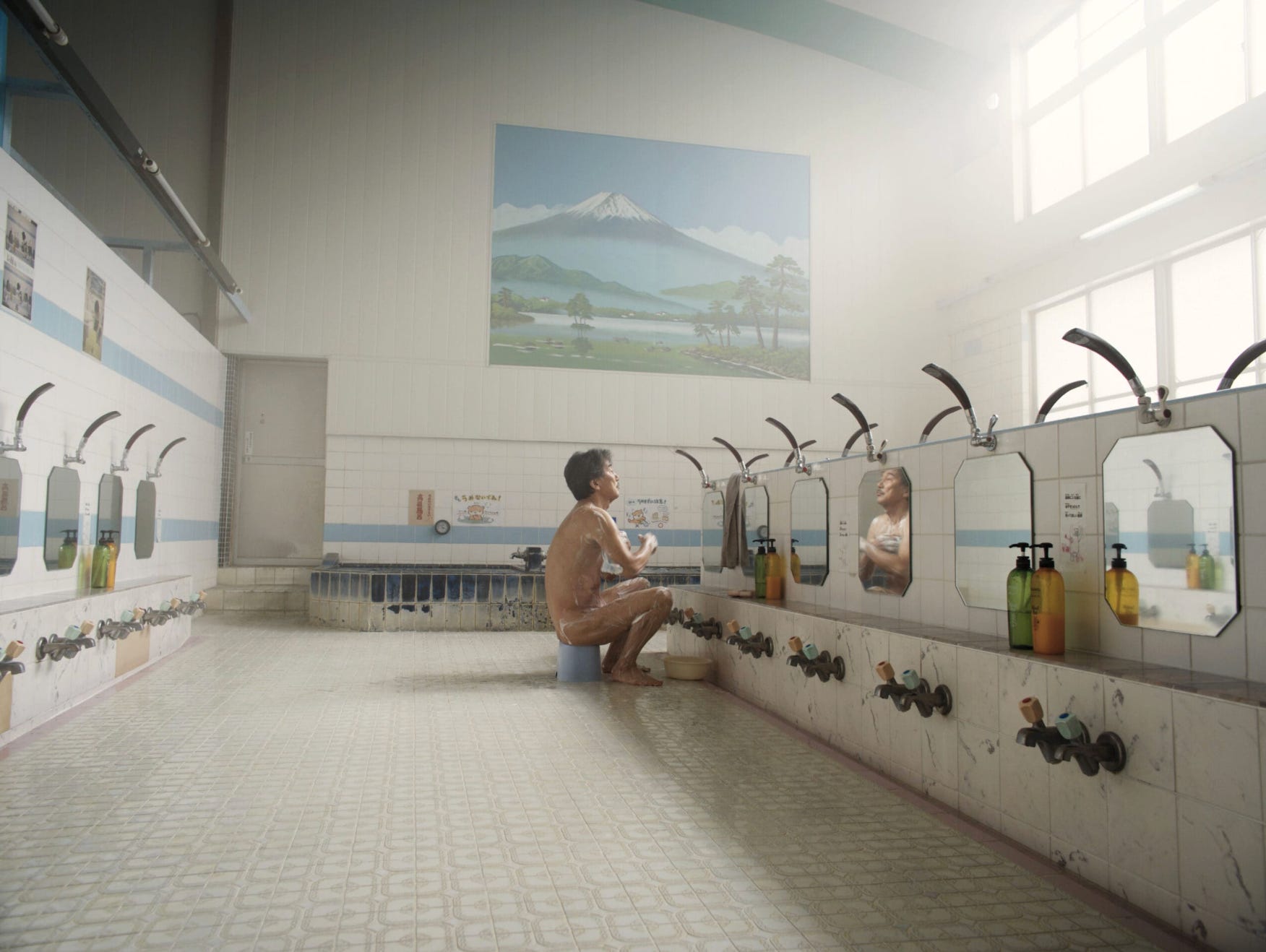
(Picture: a still from Wim Wender’s Perfect Days, 2023)
At the end of July 2026, I met Alex Soros in Ljubljana (he now runs the Soros Foundation). Since George Soros, his father, is vilified by Slovene right-wing media as Evil incarnate—financing every attempt, terrorism included, to ruin the spiritual foundations of Western civilization—the reaction of Slovene rightists to our meeting did not surprise me: their leitmotif was, “The Slovene puppet got orders from the Antichrist master.” It was also no surprise that some Slovene pseudo-radical leftists repeated a quite similar critique: meeting Soros confirmed that I am a puppet paid by billionaires. Incidentally, I have never received any money or any other form of help from charities financed by billionaires.
What I found much more interesting and amusing was a ruthless, rather paranoid critique of my meeting with Soros by Ryan Mauro who, on 30 July 2026, wrote a text entitled “The Dark Philosopher Linking Alexander Soros and Zohran Mamdani.”1 Here are some key passages from this text:
“What do New York City Mayor Zohran Mamdani and Alexander Soros—George Soros’s son and heir—have in common? A shared ideological inspiration: Slavoj Žižek, the self-proclaimed ‘left-fascist’ who seeks the West’s bloody destruction. This should chill every American.
Žižek has been described as ‘the most dangerous philosopher in the West.’ His agenda is summed up in his publisher’s description of his 2008 book, In Defense of Lost Causes: ‘Žižek argues the case for revolutionary terror and the dictatorship of the proletariat.’ The ‘lost causes’ he wants to revive and succeed are those of the Bolsheviks, Mao Tse-tung and Robespierre. The Iranian Islamic Revolution of 1979 and fascism were ‘right steps in the wrong direction.’ His book’s condemnation of Hitler reads: ‘Crazy, tasteless even, as it may sound, the problem with Hitler was that he was not violent enough … Nazism was not radical enough; it did not dare to disturb the basic structure of the modern capitalist social space.’
Although he says he is a supporter of Ukraine, he defends his relationship with the Russian government through RT, a state-controlled propaganda outlet that oversees an ‘empire of covert projects’ influencing public opinion in the West. Žižek also authored a collection of Lenin’s writings. The description advertising it says: ‘Žižek is convinced that, whatever the discussion—the forthcoming crisis of capitalism, the possibility of a redemptive violence, the falsity of liberal tolerance—Lenin’s time has come again.’
Žižek’s objective is not to win a battle of ideas, but to win a war of bloodshed and destruction so that his ideas cannot be resisted. His vision is, as he put it, one of ‘divine violence.’ He writes: ‘The most obvious candidate for “divine violence” is the violent explosion of resentment which finds expression in a spectrum that ranges from mob lynchings to revolutionary terror.’ In another book, Žižek wrote: ‘Better the worst Stalinist terror than the most liberal capitalist democracy.’ This is the man with whom Soros proudly posted a photo of himself meeting; a man who keeps a portrait of Stalin hanging in his apartment. Soros happily informed Žižek that NYC Mayor Zohran Mamdani is a ‘fan’ of his.
‘Slavoj Žižek is one of the greatest living philosophers, disrupters and cultural critics—one of a kind in many ways. Having wrestled with his works and provocations since I was a young student, I am grateful to our mutual friend … for introducing us and giving us the chance to exchange and debate our views,’ Soros wrote.
The enormity of the threat posed by a Žižek-inspired Soros Network is impossible to overstate. According to the Media Research Center, a progressive fundraising organization said Soros’ Open Society Foundations ‘may be the single most influential nonprofit organization in the world.’ The chief strategist for Morgan Stanley said he has ‘more influence in the world than anyone who has ever held high elective or appointive office.’ And a New York Times reporter quoted the president of the Carnegie Endowment as saying Soros is ‘the only man in the United States who has his own foreign policy and can implement it.’ In September, my investigation into the Soros Network discovered that over $80 million has flowed from Soros to pro-terrorism groups in the US and around the world, including some involved in domestic terrorism right here on US soil. That is the record of George Soros, the father. The son does not want to change direction. He wants to go further, and he will—unless we stop him.”
How are we to read this crazy attack on me, which, I must confess, I quite liked? I do not want to waste time pointing out all the manipulations and misreadings in Mauro’s text. Alex Soros himself explained to me why I liked it by telling me a Jewish joke from just before Hitler took power.
Two Jews meet and discuss what newspapers they read. The first says: “I read a pro-Jewish liberal daily, which informs me of the dangers facing Jews today in Germany: we are beaten, thrown out of places, boycotted …” The other replies: “I much prefer to read Streicher’s Der Stürmer.” “Why? Are you crazy? It is full of Nazi anti-Semitic propaganda …” “Yes, but I like to hear some good news. The pro-Jewish daily brings only bad news about us—how we are persecuted, beaten, harassed—but Der Stürmer repeats again and again that we Jews really control the world, manipulate others and exploit them!”
The parallel is clear: the majority of my critics present me as a pseudo-leftist, a slave of big capital, claiming that Soros came to Ljubljana to give me orders, while Mauro presents me as a secret master visited by Soros so that I could give him and Mamdani orders on how to act.
Why waste time on such anecdotes? Because, although their claim is false, they contain a grain of truth. The Nazis brutally harassed and killed Jews, but, in order to do this, they needed the fantasy that they were really dominated and controlled by Jews—in the same way that I am presented as the one who gives orders to Soros and Mamdani. It is a perfect case of an illusion that is constitutive of the brutal reality itself. Without the Nazis perceiving Jews as their arch-enemy, who wanted to dominate and ultimately destroy them, there would have been no Holocaust.
My point is that we should read, in a similar way, the phenomenon of bai lan spreading in China, but also in South Korea and Japan. It should not simply be rejected as something to worry about: we should change the frame and perceive its positive aspect as well.
Something important has been going on in China in recent years: a massive tendency among young people that has engendered panic in leadership circles. It is the spirit of passive resignation rendered by a new buzzword, bai lan (“let it rot”). Born of economic disillusionment and pushback against long-standing cultural norms, bai lan advocates a minimalist approach to work: working only the minimum required hours and prioritising personal well-being over career advancement.
The same tendency is also encapsulated by tang ping (“lying flat”), a slang neologism that stands for choosing to “lie down flat and get over the beatings” through a low-desire, indifferent attitude towards life.
Such a rejection of societal pressures to overwork and overachieve, although it presents itself as apolitical and not as a form of dissidence, radically undermines the official ideology. Back in early May 2022, China’s President Xi Jinping encouraged the country’s youth to establish “great ideals” and incorporate their personal goals into the “bigger picture” of the Chinese nation and people. “China’s hope lies in youth,” he said in a major speech.
I tend to agree with Xi, but in the sense opposite to that which he intended: yes, China’s hope lies in youth—namely, in the youth that reject even the dissident critics of the regime who demand greater economic prosperity and political freedoms.
This tendency is not limited to the younger generation. Consider another phenomenon: in July 2024, the media reported on a growing number of Chinese workers swapping high-pressure office jobs for flexible blue-collar work. Li, 27, from Wuhan, said:
“I like cleaning up. As living standards improve across the country, the demand for housekeeping services is also surging, with an ever-expanding market. The change it brings is that my head no longer feels dizzy. I feel less mental pressure. And I am full of energy every day.”2
Such a stance presents itself as apolitical: it rejects both violent resistance to the institutions of power and dialogue with those in power.
China is in a special position here because bai lan reacts to the fact that the Chinese economic order does not remunerate good education and hard work. Good personal connections are more important, and the most coveted job is a permanent position in the state apparatus.
The situation in South Korea and Japan is different. Alexandre Kojève, the great interpreter of Hegel from the 1930s to the 1950s, saw the moment of the “end of history,” the highest form of social order, first in Stalinist Russia and then in contemporary Japan. If Kojève were alive today, he would have chosen South Korea3—why?
South Korea is arguably the country of free choice: not in the political sense, but in the sense of daily life, especially among the younger, depoliticised generation. The choice we are talking about is the indifferent choice of moderate daily pleasures: the choice among options that do not really matter—what one listens to and reads, how one dresses, how one socialises and eats, which foreign country one visits for a holiday, and so on.
There is a recent film that perfectly depicts the stance of such a post-political, disengaged individual: Perfect Days (Wim Wenders, 2023), a Japanese-German co-production, in which Kōji Yakusho plays Hirayama, who works as a toilet cleaner in Tokyo and is fully content with his simple life. Following a ritualised daily rhythm, he repeats the same routine from dawn onwards and dedicates his free time to his passions: music in his van on the way to and from work, and books each night before bed.
Japan comes closest to South Korea in this trend towards depoliticised disengagement. Even the immensely popular Japanese eco-Marxist Kōhei Saitō advocates the motto “slow down,” the title of his latest book.
This new generation mostly does not care about big issues such as human rights and freedoms, or the threat of war. While the world still notices the aggressive pronouncements of the North Korean regime, accompanied by nuclear threats, the large majority in South Korea simply ignore them. Since the standard of living of the large majority is relatively high, people live comfortably in a bubble.
North Korea is the opposite: permanent mobilisation and a state of emergency; no free choices; life focused on confronting the Enemy. To counter this indifference among young people, which is also spreading in China, Xi Jinping recently lauded Chinese civilisation for its long and continuous history stretching back to antiquity, saying that it has shaped the great Chinese nation. He emphasised that it is imperative to comprehensively improve the protection and use of cultural relics, and better preserve and carry forward cultural heritage.4 He does not talk about Communism and freedom, but about Confucianism and happiness.
What should worry us about this focus on stability and happiness is that it points towards an ultimate form: “enforced welfare,” the term for a series of measures that represent a dark chapter in the history of Swiss social welfare. The victims of these measures included child labourers, children in homes, forced adoptees, and people committed to secure institutions—so-called “administrative wards.” Some were also forced to undergo abortion, sterilisation and castration.5
The same practice was widespread in many other countries. An especially well-known case is that of Canada, where children were taken from Native families and placed in institutions, mostly Catholic, where up to 80% of them were sexually abused.
But what interests me is the expression “enforced welfare”: the paradox that resonates in it, if we take “welfare” in its common meaning. Imagine that I am a poor, homeless man and the state decides to give me a modest regular income so that I can survive and lead a decent life. My reaction is: “No thanks, you will not compel me to accept this!”
This paradox is part of our reality now. The US and Israel have again proposed a plan to construct a “safety zone” in southern Gaza: a limited space where Palestinians who are not on the list of Hamas terrorists could freely enter, but not exit back into Gaza. Once they are in, they will be safe and properly fed, but they will be allowed to leave neither the zone nor Gaza itself. Is this not a perfect case of enforced welfare? First, foreigners ruin your country; then they establish a closed “welfare” zone that is, in reality, a concentration camp.
Back to China: are there not also clear elements of enforced welfare in the way the Chinese state treats Tibetans and Uyghurs? Welfare is real here: Tibet was highly developed under Chinese control—the average age at death rose from 32 to 55, and so on.
To take this line of thought to the end, in safety zones we are like turtles on their backs. I recall a story about turtles that I read decades ago and that deeply affected me.
On an island without humans, researchers discovered a group of large turtles which, as part of their survival strategy, had to walk a short path from a slightly elevated plateau to the nearby beach. Between the plateau and the beach, however, the surface suddenly, rather than gradually, dropped. Many turtles consequently fell onto their backs and, since they were unable to turn themselves over, suffered a long and agonising death.
The researchers, of course, intervened to prevent this useless suffering. They turned over the turtles lying helplessly on their backs, and even levelled the ground a little. The success was immediate. But then the true tragedy struck: the number of turtles multiplied rapidly, and this change destroyed the environmental balance of that small region. The final result was the desolation of the place.
The sad lesson of this horrible story is that what the researchers took for a dysfunction causing useless suffering was actually a key moment in the stable and balanced reproduction of life on that island. True thinking compels us to accept that what appears to us as a stable environment may rely on a great deal of terrible suffering. Something similar holds for our “rich” societies, which is why we should be very careful with social engineering.
This brings us back to our starting point. Of course, people who practise bai lan in one form or another do not resemble turtles lying on their backs: they reject the entire logic of the race that leads to falling onto one’s back. Those who are subjected to enforced welfare are not starving—they are like turtles on their backs who are, for the most part, normally fed.
The bai lan people do not strive for better social engineering, as dissidents do. My point is not that we should all strive to follow bai lan. What we should do is undergo the radical experience of the meaninglessness of social engagement that grounds bai lan. Only in this way might we arrive at a social order that no longer needs turtles on their backs in order to reproduce itself.
https://glennbeck.com/read/articles/the-dark-philosopher-linking-alexander-soros-and-zohran-mamdani.
Chris Lau and Hassan Tayir, ‘They used to work for China’s biggest companies. Now they’re doing manual labour’, CNN, 20 July 2024 (https://edition.cnn.com/2024/07/20/economy/china-economy-employment-blue-collar-work-intl-hnk).
I follow here the suggestion of my Korean friend Alex Taek-Gwang Lee.
See https://Iwww.bar.admin.ch/en/enforced-welfare-measures.
This disengagement is widespread globally and will be the perfect bridge to benevolent AI dictatorship, if that’s where we’re headed.
I'm very interested to see how this change in worker mentality impacts the economy of Asia over time. I think it's much more relevant to those cultures than our western ones because we don't value work the way they do. If you listen to any European or American expat living in Japan or S Korea, they often talk about the brutal and often useless hours they're forced to work. I can see why they're trying to find a better equilibrium.